
Capture the first rainfall runoff
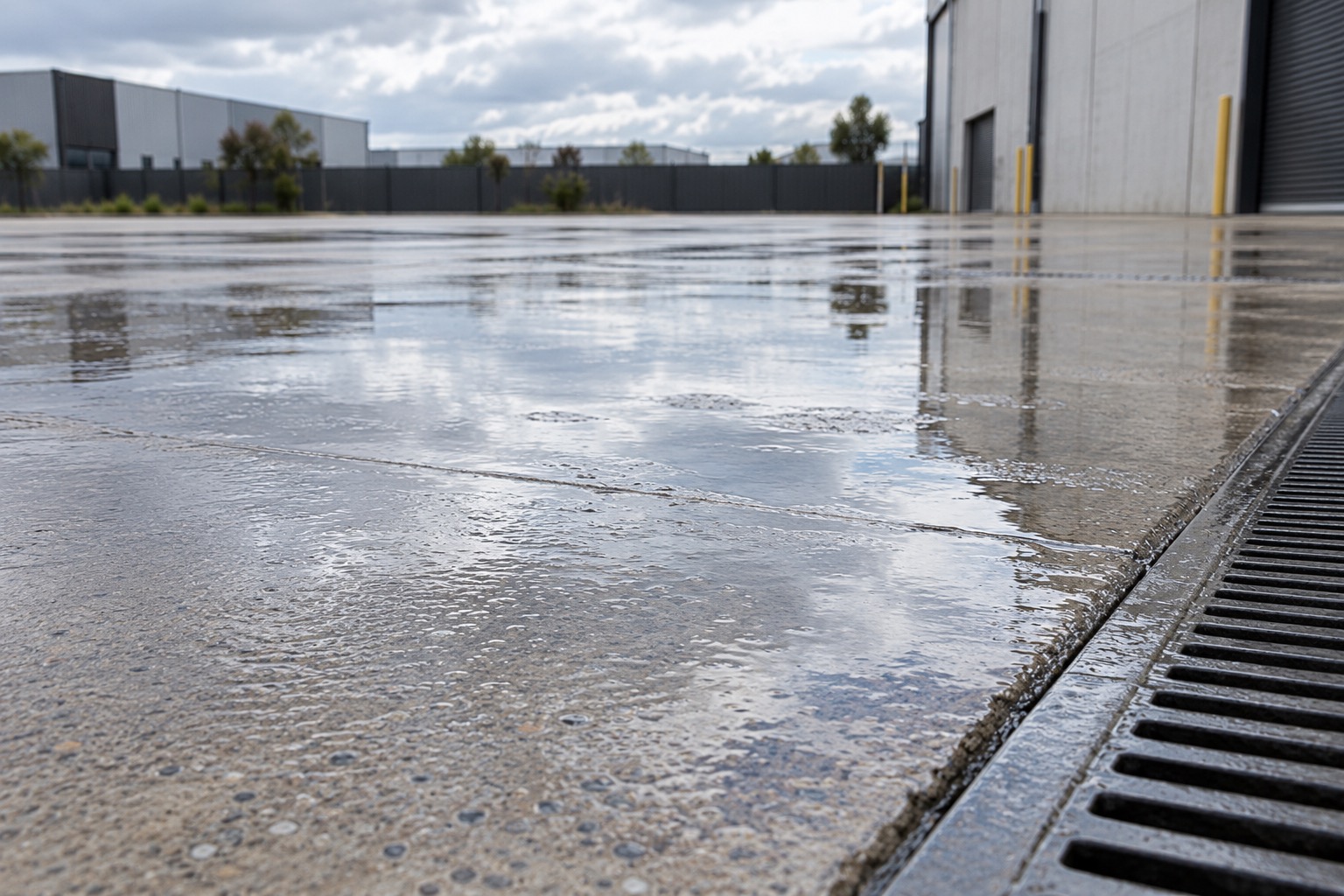
A first flush diversion system directs a defined initial runoff volume to the designed collection or treatment system. The later rainfall route is part of the site drainage design.
What makes up the system?
- Catchment & collection. Define the area draining to the system and how residues are collected.
- Diversion equipment. Select the system and initial capture volume for the catchment.
- Downstream connections. Plan treatment or storage and the designed rainfall outlet.
How first flush diversion works
1. Rain starts →
Rain washes residues from the exposed wash area into its drainage system.
2. Capture the first flush →
The defined initial runoff volume is directed to the designed collection or treatment arrangement.
3. Divert later rainfall
Once the selected first-flush volume has been captured, later rainfall follows the separately designed drainage route.
Options for your site
- Silt capture. Upstream sediment control suited to the material on the area.
- Storage & treatment. Holding capacity and oil separation or other treatment as required.
- Washdown diversion. Assess whether active washdown also needs demand-driven diversion.
Questions before you order
Use catchment area, site contaminants, rainfall behaviour and the relevant drainage and authority requirements.
This page concerns industrial wash bay and hardstand runoff. Domestic roof-water first-flush devices solve a different task.
No. First flush addresses initial rainfall runoff. Demand-driven diversion responds to wash activity. A site may need both functions.
The manufacturer’s FF600 information and specification drawing are available below. Confirm the selected model, installation and operating requirements in your proposal.