
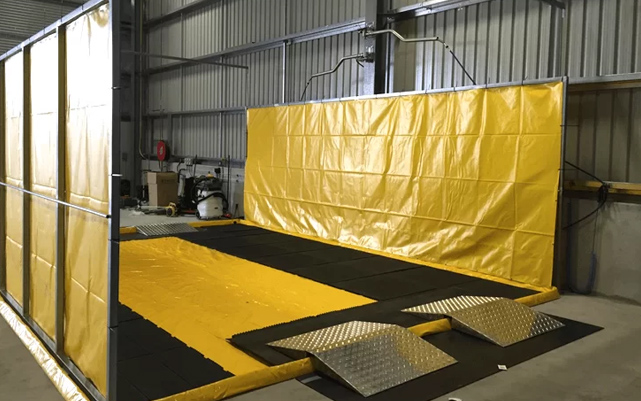
Build the washdown area around the project procedure
Utes, trucks and machinery moving between weed-risk areas need more than a pressure washer. Plan vehicle movement, the clean-down task and the handling of the soil, seeds and wash water removed.
A contained washdown system supports the project’s biosecurity procedure. It does not replace inspection, operator technique or the records and release requirements set for the site.
Separate the dirty approach from the checked exit
1 · Arrive from the risk area
Direct vehicles to the clean-down point using the site’s agreed route.
2 · Wash and collect
Remove material using the approved procedure and collect the resulting water and solids.
3 · Inspect before release
Complete the required checks before the vehicle moves into the designated clean area.
Conceptual movement sequence, not a certified site layout. Traffic routes and inspection points must match the project procedure.
Consider whether vehicles could pick up contaminated material again after cleaning. The washdown area, approach, operator access and waste-handling route should be planned together.
Match the equipment to the largest vehicle
Send the largest vehicle dimensions and operating weight, including trailers and attachments. Check wheel or track loads, ramp access, approach space and room for operators to reach the surfaces that need cleaning.
The Light Vehicle Biosecurity Package starts with a 6 × 4 m mat configuration. The Heavy Vehicle Biosecurity Package starts with a 10 × 4 m configuration. These are mat dimensions, not a statement that every vehicle in a class will fit. Suitability and the complete operating footprint need to be checked.
Mixed fleets, tracked plant and unusual vehicle dimensions may need a different configuration. Describe those requirements when discussing the site.
Confirm water, power and the recovery route
Identify the water source, wash frequency, expected soil loading and the time available for each vehicle. Confirm the power supply and location of the recovery equipment before setting out the bay.
The petrol pressure washer in a proposed package does not require mains electricity for washing, but a 12V recovery pump still requires a suitable supply. Petrol pressure washers must not be used indoors.
Work through the complete route: wash mat → recovery and any supplied filtration → holding, further treatment or an agreed disposal destination. Keep hoses and collection equipment positioned for operation and maintenance.
Plan how captured material will be handled
Soil and plant material collected during washing still need controlled handling. Define who empties or changes filters, where residue is held, how the bay is cleaned and how material leaves the site.
Filter bags can capture suitable solids within the specified filtration arrangement. They do not establish that every seed, dissolved contaminant or biosecurity risk has been removed. Confirm the actual filtration specification and the site’s water and residue requirements.
A pump transfers water; it does not by itself treat it. Where disposal or additional treatment is needed, include that scope before operation begins.
Assign inspection and operating responsibilities
On a phone, swipe the table sideways to compare the columns.
| Site decision | Information to settle |
|---|---|
| Vehicle movement | Risk zones, approach and exit routes, inspection point and release process |
| Clean-down task | Surfaces to inspect, cleaning method and the project procedure |
| Operating roles | Who operates, inspects, records and authorises vehicle release |
| Collected water and solids | Holding, residue handling, treatment or disposal destination |
| Daily checks | Access, mat condition, hoses, pump, filtration and housekeeping |
| Relocation | How equipment and captured material are managed when moving the setup |
Queensland’s Come clean, go clean guidance provides a starting point for vehicle and equipment hygiene. Apply the current requirements for your project, location and risk assessment.
Equipment supply, inspection and import quarantine are different
Trade Wash’s biosecurity pages describe washdown equipment. They are not bookings for a cleaning crew, weed hygiene certification or a public wash facility.
Imported goods under biosecurity control can involve separate approved-arrangement requirements. A portable package is not evidence that a site is approved for that purpose. See the Department of Agriculture’s approved-arrangement terminology and confirm the applicable process before specifying equipment.
Prepare your biosecurity washdown brief
- Vehicle list, largest dimensions, operating weight and wheel or track configuration.
- Site plan or photos, risk zones, available surface and footprint.
- Wash frequency, likely soil loading and relocation requirements.
- Available water and suitable recovery-pump power.
- Water and residue handling arrangements, plus any known project conditions.
Discuss your biosecurity setup
Biosecurity Washdown → · Light Vehicle Biosecurity Package → · Heavy Vehicle Biosecurity Package →